

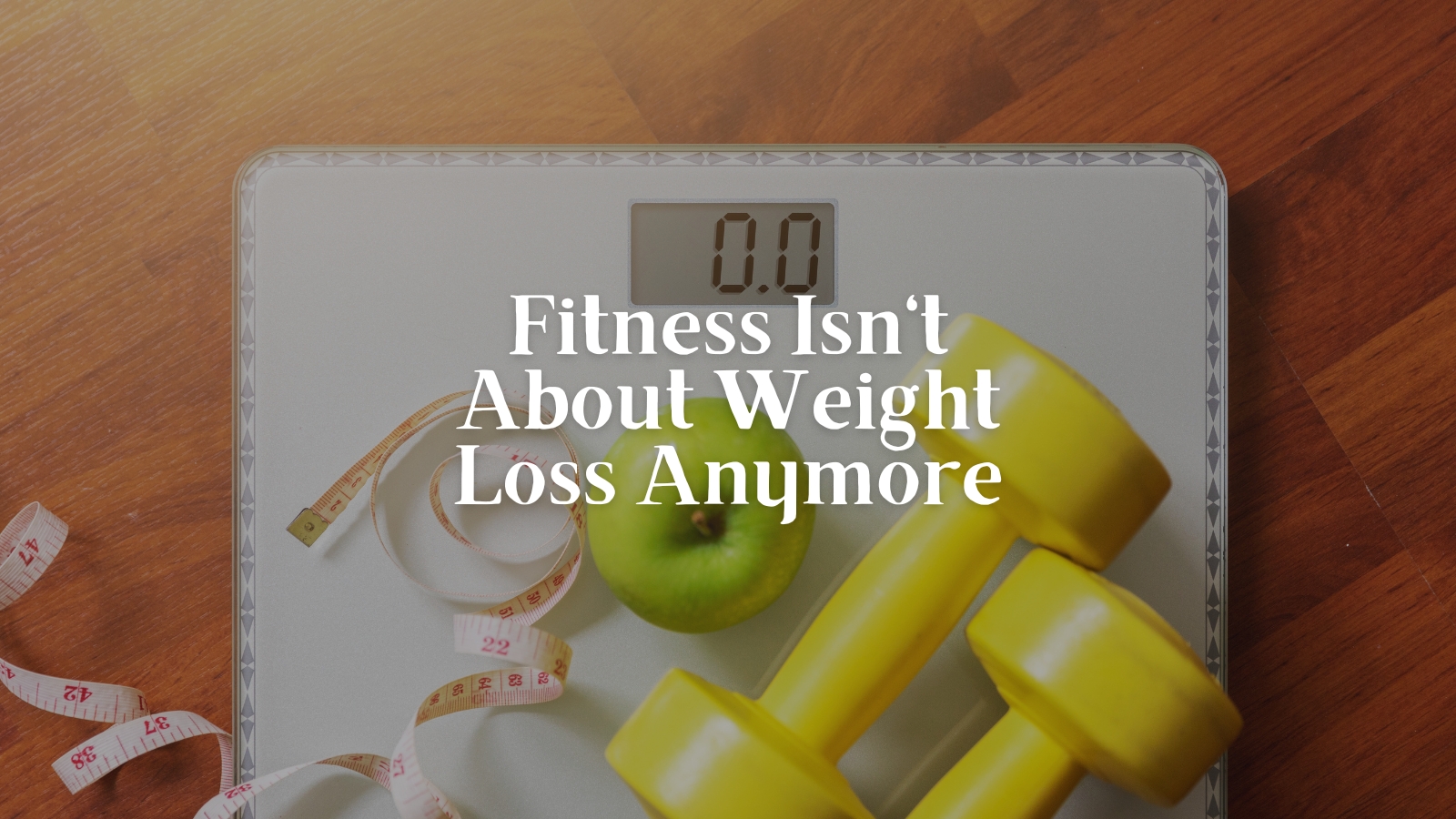
For decades, we've been taught to measure fitness progress by one thing:
Body weight.
Lose five pounds? Success.
Gain two pounds? Something must be wrong.
But your scale can't tell you whether those pounds are muscle, body fat, water, or normal day-to-day fluctuations.
That's why focusing only on weight can give you an incomplete - and sometimes frustrating - picture of your progress.
A better question isn't simply:
"How much do I weigh?"
It's:
"What is my body made of?"
Body composition looks at the different components that make up your total body weight, including body fat and lean mass.
Two people can weigh exactly the same amount and have very different body compositions.
Even more importantly, your own weight can stay relatively stable while your body changes significantly.
You might lose body fat while building muscle.
The scale may barely move, but your clothes fit differently, you're stronger, and your body composition has improved.
You've probably heard someone say, "Muscle weighs more than fat."
Technically, a pound is a pound.
But muscle is denser than fat, meaning a pound of muscle occupies less space than a pound of fat.
That's why someone can become noticeably leaner without seeing a dramatic change on the scale.
This is also why photos, measurements, strength improvements, clothing fit, and body-composition data can sometimes reveal progress the scale misses.
Body recomposition refers to reducing body fat while maintaining or increasing lean muscle.
Instead of making weight loss the only goal, the focus becomes improving the ratio of muscle to body fat.
That usually requires a combination of:
Body recomposition doesn't happen overnight.
But when you're building muscle while losing fat, the scale may move much more slowly than you expect.
That doesn't mean nothing is happening.
As we discussed last week, muscle isn't only about appearance.
Maintaining muscle supports strength, movement, metabolic health, and physical function as we age.
That's why aggressive weight-loss approaches that focus exclusively on making the number on the scale smaller can miss an important part of the equation.
The goal shouldn't necessarily be to become the lightest version of yourself.
For many people, a better goal is becoming stronger, healthier, and more capable.
Have you ever stepped on the scale one morning and suddenly been two or three pounds heavier?
You didn't gain several pounds of body fat overnight.
Body weight naturally fluctuates because of factors such as:
That's why reacting emotionally to a single weigh-in isn't particularly useful.
Trends over time provide much more information than one number on one morning.
Your scale can still be one tool.
It just shouldn't be the only tool.
Consider tracking:
Strength: Are you lifting heavier weights?
Body composition: Is your lean mass or body-fat percentage changing over time?
Measurements: Are your waist or other measurements changing?
Clothing: Do your clothes fit differently?
Performance: Can you do more than you could several months ago?
Energy: Do you feel stronger and more capable throughout your day?
Looking at several measurements together gives you a much clearer picture.
At Fit Haus, we can use InBody body-composition analysis to look beyond total body weight.
Rather than focusing exclusively on the number on the scale, body-composition measurements can help track changes in areas such as muscle mass and body fat over time.
But even body-composition testing isn't something to obsess over from one scan to the next.
The real value comes from looking at trends over time alongside your training performance and how you feel.
Imagine two versions of yourself.
One weighs less but has lost both fat and muscle.
The other weighs slightly more but is stronger, carries more muscle, has less body fat, and performs better.
Which one represents better progress?
That's why the scale needs context.
Your goal isn't simply to occupy less space or reach the smallest possible number.
The goal is to build a healthier, stronger body.
If you've been training consistently but the scale isn't changing as quickly as you'd hoped, don't immediately assume your program isn't working.
Look at the bigger picture.
Are you stronger?
Are your measurements changing?
Do your clothes fit differently?
Are you building muscle?
Do you feel better?
Your weight is one piece of information.
It isn't your entire progress report.
At Fit Haus, we combine structured strength training, coaching, and body-composition tracking to help you understand what your body is actually doing - not just what the scale says.
📍 Fit Haus
19255 Everett Ln Unit C, Mokena, IL 60448
📞 815-201-2444
🌐 www.fithausteam.com



.jpg)
















-5.jpg)
-4.jpg)
-3.jpg)
-2.jpg)
.jpg)

-5.jpg)
-4.jpg)
-3.jpg)
-2.jpg)
.jpg)
-6.jpg)
-5.jpg)
-4.jpg)
-2.jpg)
-7.jpg)
-6.jpg)
-5.jpg)
-4.jpg)
-2.jpg)
%20(3).jpg)
%20(2).jpg)
%20(1).jpg)
.jpg)
-5.jpg)
-4.jpg)
-2.jpg)
.jpg)
-6.jpg)
-5.jpg)
-4.jpg)
-2.jpg)
.jpg)
-9.jpg)
-8.jpg)
-7.jpg)
-6.jpg)
-5.jpg)
-4.jpg)
-3.jpg)
-5.jpg)
-3.jpg)
-4.jpg)
.jpg)