
When people think about fitness goals, they often think about what they want to change right now.
Lose weight.
Build muscle.
Look better.
Get ready for an event or vacation.
Those are perfectly valid goals. But there's another reason to exercise that becomes increasingly important as we get older:
We are training for our future selves.
The strength, balance, mobility, endurance, and habits you build today can influence what you're capable of doing years from now.
Healthy aging isn't simply about living longer.
It's about maintaining the ability to live well for as long as possible.
Muscle isn't just about appearance.
It's what allows you to carry groceries, climb stairs, lift a suitcase, get off the floor, play with your kids or grandkids, and continue doing everyday activities independently.
As we age, maintaining muscle becomes more challenging, which makes resistance training increasingly important.
You don't have to become a bodybuilder.
You simply need to keep giving your muscles a reason to stay strong.
Think about what you want your life to look like at 60, 70, or 80.
Do you want to travel?
Garden?
Play golf or tennis?
Hike?
Pick up your grandchildren?
Get up from the floor without assistance?
Those activities require strength.
This is why we encourage people to stop viewing strength training solely as something you do to change your appearance.
Strength is an investment in independence.
Balance is another physical ability we tend to take for granted—until we start losing it.
Strengthening your legs and core, practicing single-leg movements, improving coordination, and challenging stability can all contribute to better overall movement.
This is also one reason different forms of exercise can complement each other so well.
Traditional strength training builds physical capacity, while practices such as Reformer Pilates can challenge stability, control, coordination, and body awareness.
Healthy aging isn't only about muscle.
Cardiovascular fitness matters too.
Walking, running, cycling, rowing and conditioning workouts challenge your cardiovascular system and help build the endurance required for everyday life.
You don't need to spend hours doing cardio.
A balanced fitness routine can incorporate both resistance training and cardiovascular conditioning.
Being strong is important.
But you also need to be able to move.
Mobility helps you comfortably reach, bend, rotate, squat, and move through the ranges of motion everyday life requires.
This doesn't mean you need to be exceptionally flexible.
The goal is to maintain enough movement quality to continue doing the things you enjoy without unnecessary limitations.
Training provides the stimulus for improvement.
Recovery gives your body the opportunity to adapt.
Quality sleep, appropriate rest days, nutrition, hydration, mobility work, and stress management all become part of a sustainable fitness routine.
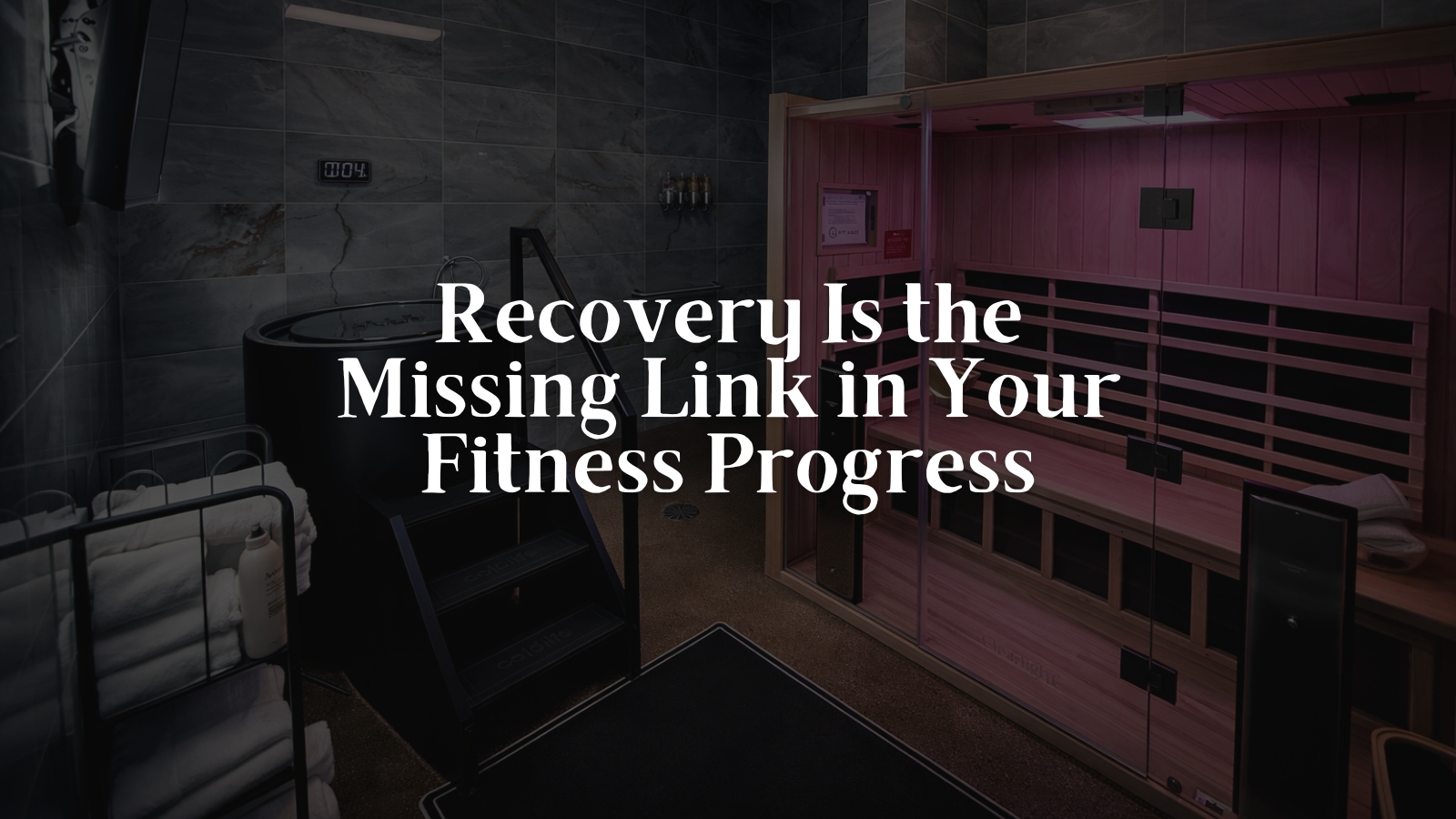
At Fit Haus, we also offer recovery options such as infrared sauna, cold plunge contrast therapy, and Normatec compression because recovery can be intentionally incorporated into an overall wellness routine.
The goal isn't to constantly push your body harder.
It's to create a routine you can continue for years.
One of the biggest misconceptions about aging and fitness is that getting older means you should stop challenging yourself.
It doesn't.
But smart training matters.
Your exercise routine can evolve with you.
Maybe you prioritize strength training several days per week.
Maybe you add Pilates for control and mobility.
Maybe you incorporate conditioning, walking, recovery, or personal training based on what your body needs.
The goal isn't to prove you can still train exactly the way you did decades ago.
The goal is to keep training so you're capable of doing what you love decades from now.
Fitness marketing often focuses on quick transformations.
But some of the most important benefits of exercise won't show up in a before-and-after photo.
They're the things you may notice years from now:
Still being able to travel.
Still carrying your own groceries.
Still playing sports.
Still getting on the floor with your grandchildren.
Still feeling confident in your body.
Still being independent.
That's a different kind of fitness goal.
And arguably, it's one of the most important.
You don't need to wait until you're older to start thinking about healthy aging.
The work starts now.
Build muscle.
Challenge your heart.
Maintain your mobility.
Prioritize recovery.
Keep moving.
Because the ultimate goal isn't simply to add years to your life.
It's to add more life to those years.
Whether your routine includes small-group strength training, Reformer Pilates, personal training, conditioning, or recovery, we'll help you find an approach that works for your body, goals, and lifestyle.
📍 Fit Haus
19255 Everett Ln Unit C, Mokena, IL 60448
📞 815-201-2444
🌐 www.fithausteam.com
.jpg)







-5.jpg)
-4.jpg)
-3.jpg)
-2.jpg)
.jpg)

-5.jpg)
-4.jpg)
-3.jpg)
-2.jpg)
.jpg)
-6.jpg)
-5.jpg)
-4.jpg)
-2.jpg)
-7.jpg)
-6.jpg)
-5.jpg)
-4.jpg)
-2.jpg)
%20(3).jpg)
%20(2).jpg)
%20(1).jpg)
.jpg)
-5.jpg)
-4.jpg)
-2.jpg)
.jpg)
-6.jpg)
-5.jpg)
-4.jpg)
-2.jpg)
.jpg)
-9.jpg)
-8.jpg)
-7.jpg)
-6.jpg)
-5.jpg)
-4.jpg)
-3.jpg)
-5.jpg)
-3.jpg)
-4.jpg)
.jpg)