
You finished your workout.
Now what?
For many people, recovery simply means not working out.
But taking a day off and actually supporting your body's recovery aren't necessarily the same thing.
Training creates stress. That's intentional. Your muscles, cardiovascular system, and nervous system are challenged so your body has a reason to adapt.
But those adaptations don't happen because you trained harder.
They happen when your body has enough time and resources to recover from that training.
When you strength train, you challenge your muscles.
When you perform conditioning work, you challenge your cardiovascular system.
When you progressively increase your training demands, your body responds by adapting.
But more exercise isn't automatically better.
If you're constantly adding stress without allowing adequate recovery, eventually the quality of your training can suffer.
Think of fitness as a cycle:
Train → Recover → Adapt → Repeat
Skip the recovery portion consistently, and you're interfering with the process you're working so hard to create.
A rest day may simply mean you didn't exercise.
Recovery is broader.
It includes the things you do to help your body prepare for the next training session:
Recovery doesn't always mean lying on the couch all day.
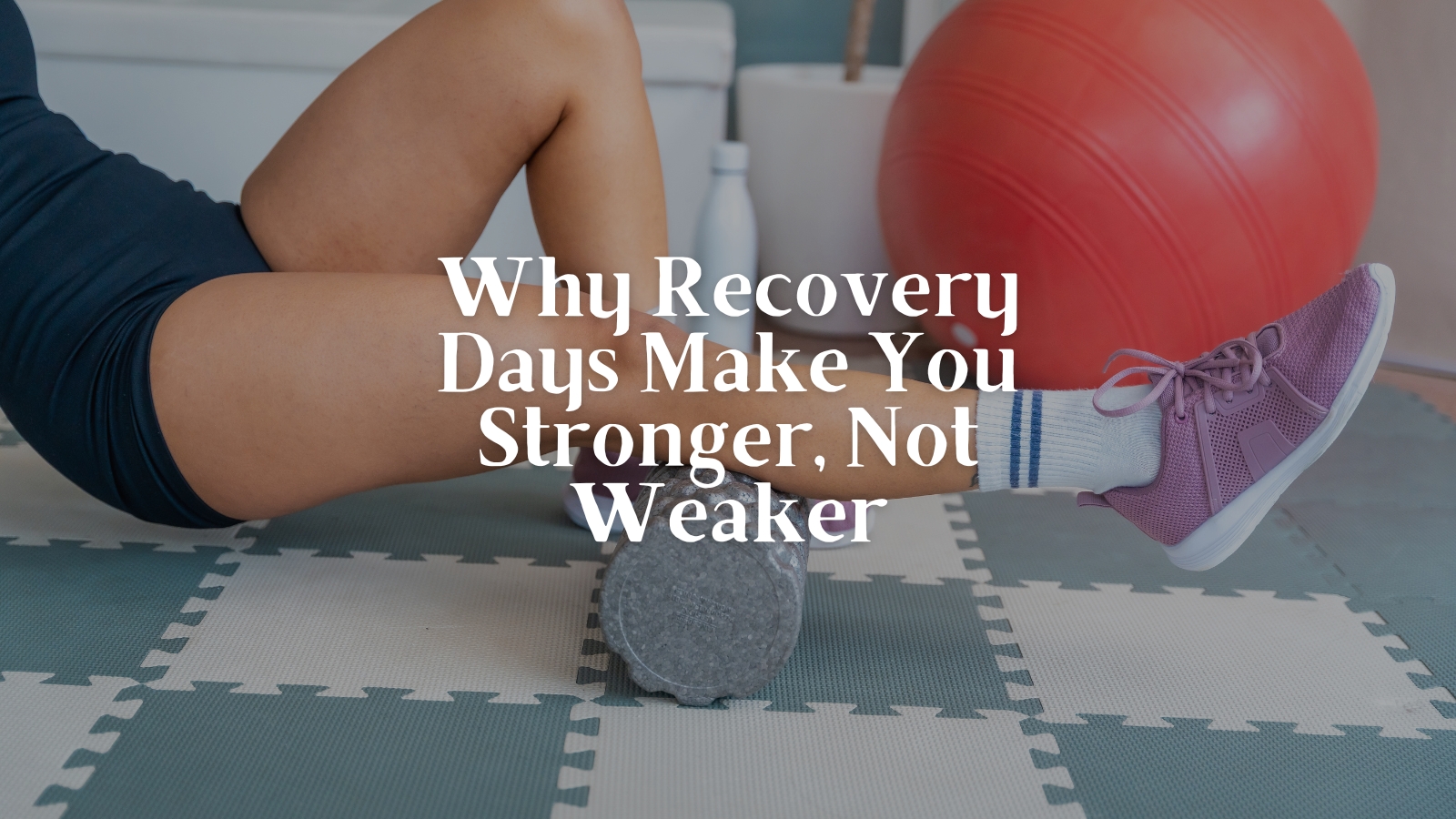
Sometimes gentle movement is exactly what your body needs.
You can buy every recovery gadget available, but none of them replaces sleep.
Sleep is when many important recovery processes occur.
Consistently poor sleep can affect energy, performance, reaction time, mood, and your ability to train effectively.
If you're training several times per week but regularly sleeping five hours per night, another recovery treatment isn't going to erase that.
Start with the basics.
Training creates the demand.
Nutrition helps provide the materials your body needs to respond.
Protein is particularly important because it provides amino acids used for muscle repair and maintenance.
Carbohydrates can also help replenish energy stores used during training.
And hydration matters because even modest dehydration can affect how you feel and perform.
Recovery isn't something that starts when you book a massage or step into a sauna.
It starts with what you do every day.
Sometimes your body doesn't need another intense workout.
It needs movement without significant additional stress.
Active recovery could include:
The goal isn't to turn your recovery day into another hard training session.
It's simply to move, promote circulation, and give your body a break from higher-intensity work.
Recovery tools can be useful additions to a well-rounded routine.
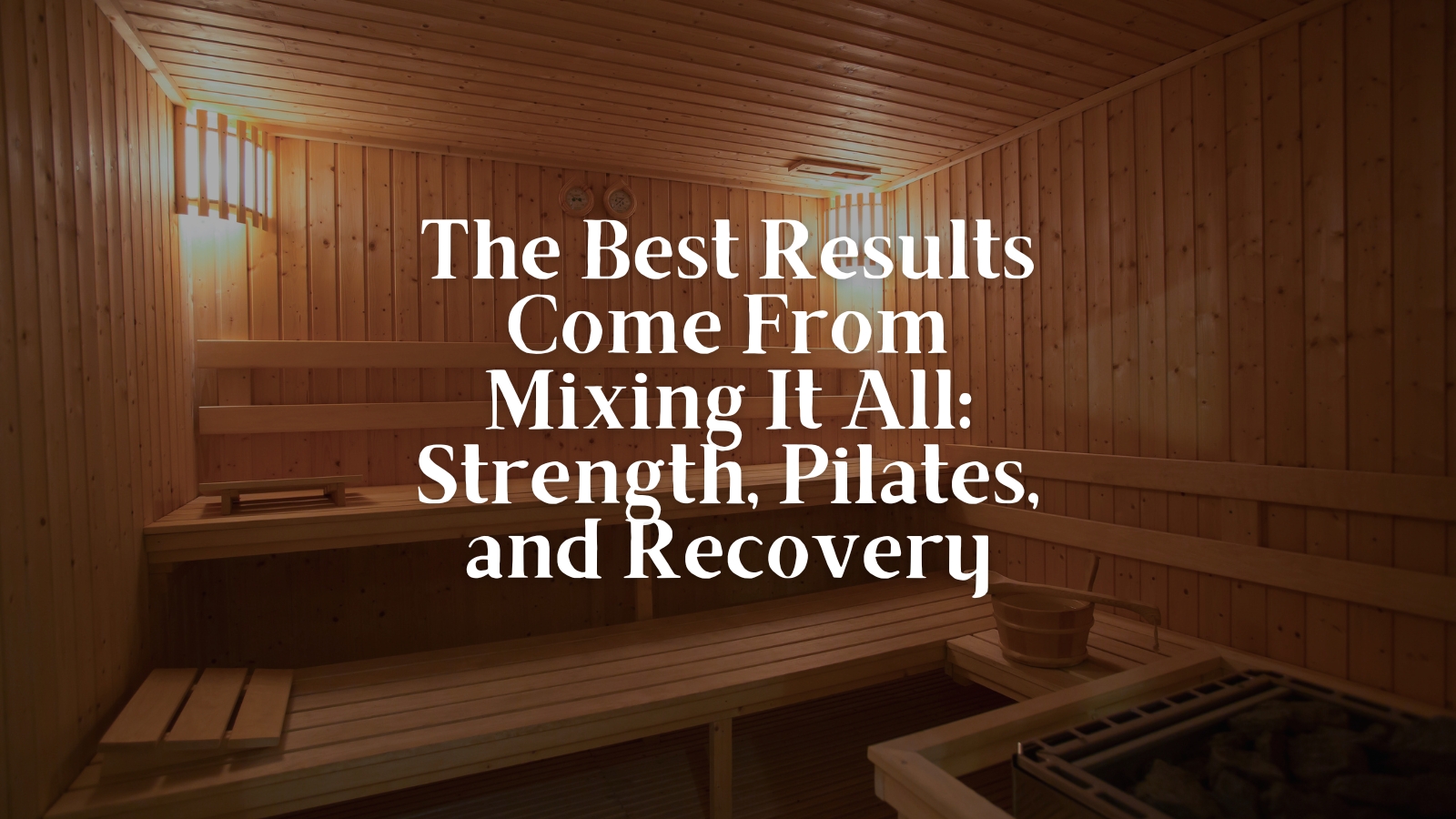
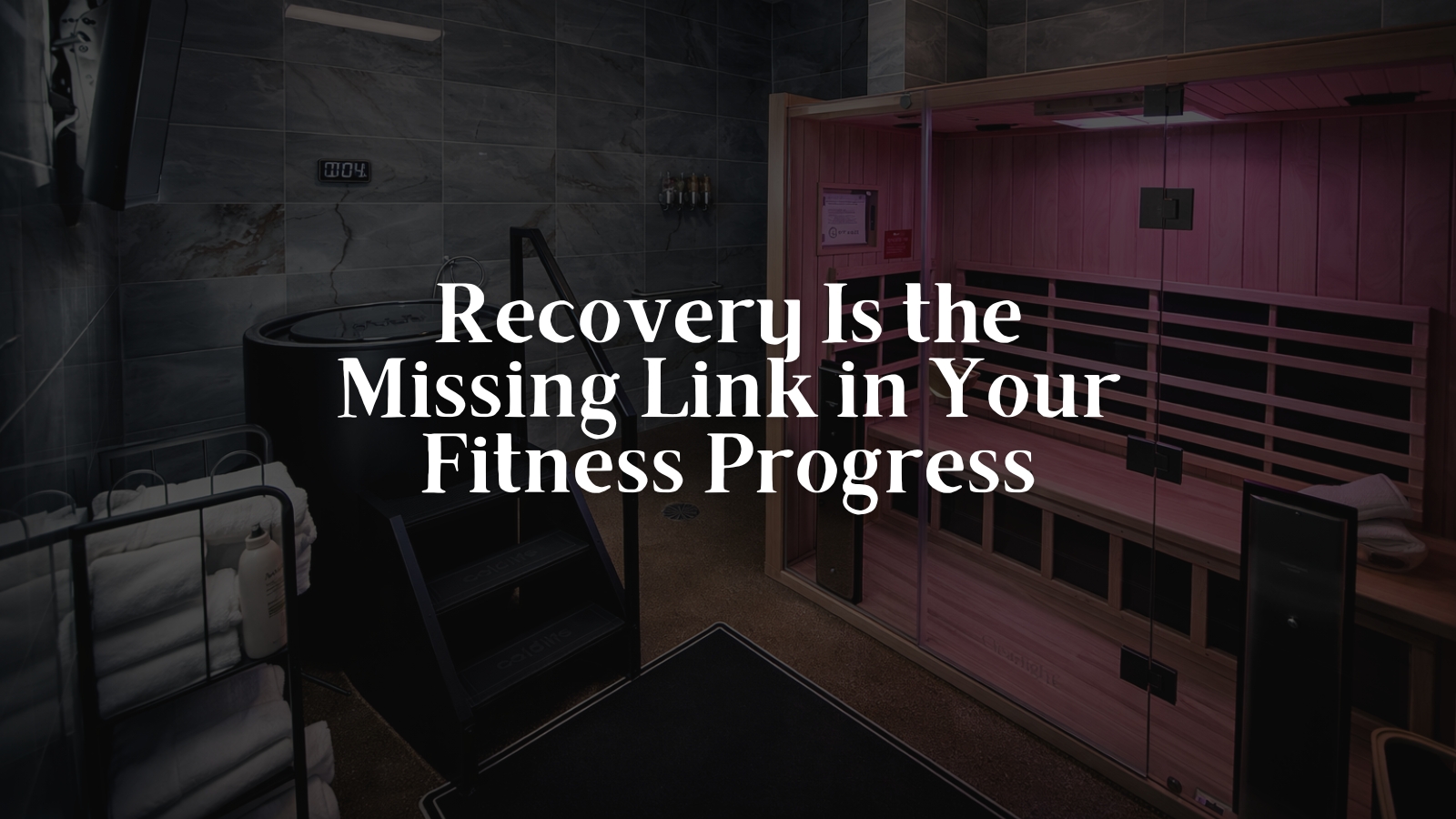
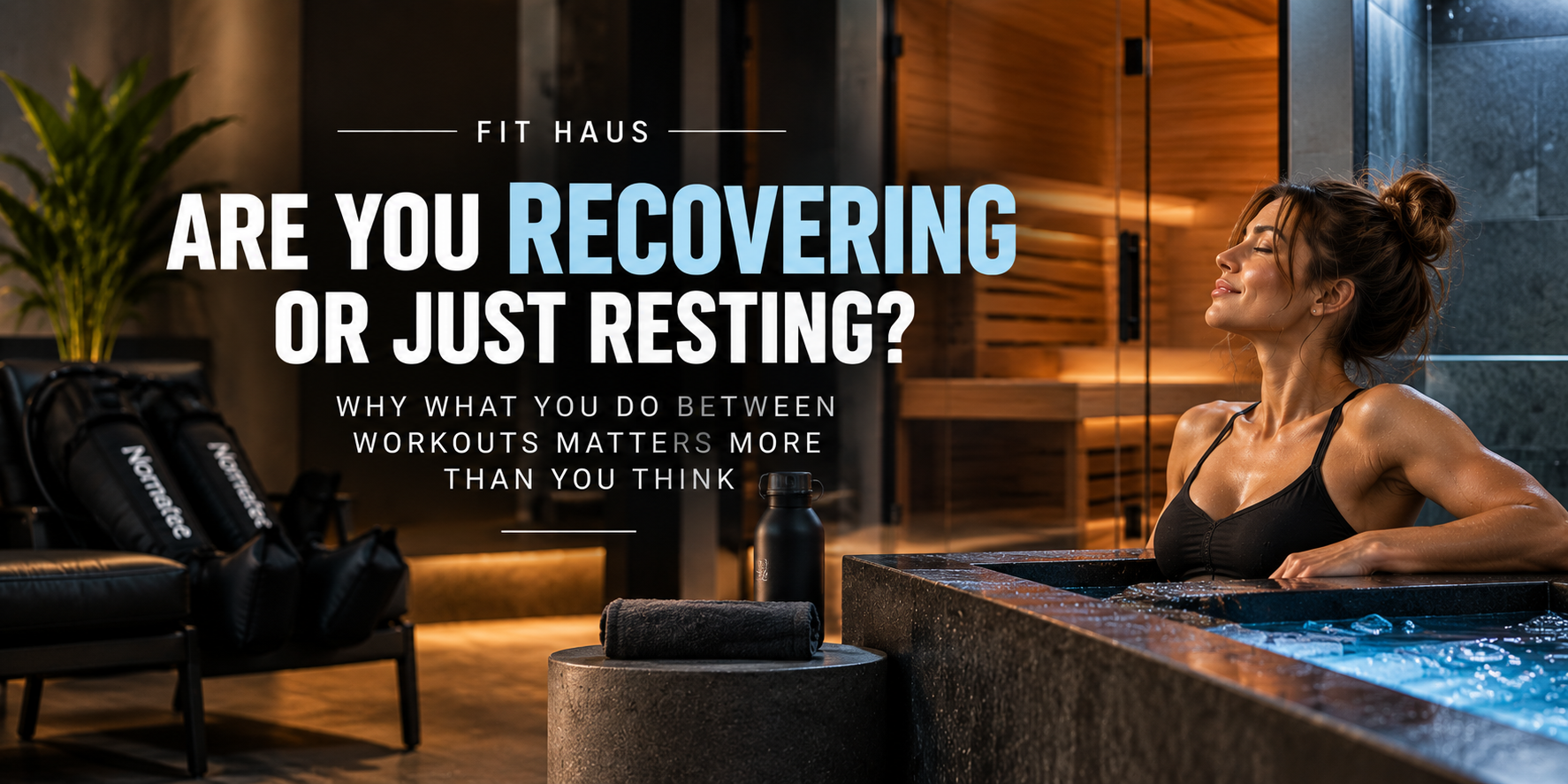
At Fit Haus, our Contrast Therapy sessions combine an infrared sauna and cold plunge in a private suite.
Many people use sauna and cold exposure because they enjoy how they feel afterward - relaxed, refreshed, and ready for their next training session.
These tools shouldn't replace sleep, nutrition, hydration, or appropriate programming.
Think of them as another layer of your recovery routine rather than the foundation.
Compression therapy is another recovery option.
Normatec compression uses inflatable boots that rhythmically compress the legs.
For someone who trains frequently, runs, plays sports, competes in HYROX, or simply spends a lot of time on their feet, compression can be an enjoyable way to incorporate dedicated recovery time into the week.
Again, the goal isn't to find a magic recovery tool.
It's to build a recovery system.
Your body often gives you clues when your training and recovery aren't balanced.
Pay attention if you consistently notice:
One difficult workout doesn't necessarily mean you're under-recovered.
But patterns matter.
This is especially important for people who love to train.
Taking a recovery day can sometimes feel like you're doing nothing.
You're not.
If recovery allows you to return to your next workout stronger, more energized, and capable of performing well, it's serving a purpose.
The goal isn't to see how many workouts you can survive.
The goal is to build a body that can continue training for years.
Long-term fitness requires both.
Challenge your body.
Then give it what it needs to adapt.
Sleep.
Eat well.
Hydrate.
Move.
Manage stress.
Use recovery tools when they make sense for you.
Then come back ready to train again.
That's not taking time away from your fitness.
That's part of your fitness.
At Fit Haus, recovery doesn't have to be an afterthought. Our private Contrast Therapy suites combine infrared sauna and cold plunge, and Normatec compression provides another option for members looking to intentionally incorporate recovery into their routine.
📍 Fit Haus
19255 Everett Ln Unit C, Mokena, IL 60448
📞 815-201-2444
🌐 www.fithausteam.com